
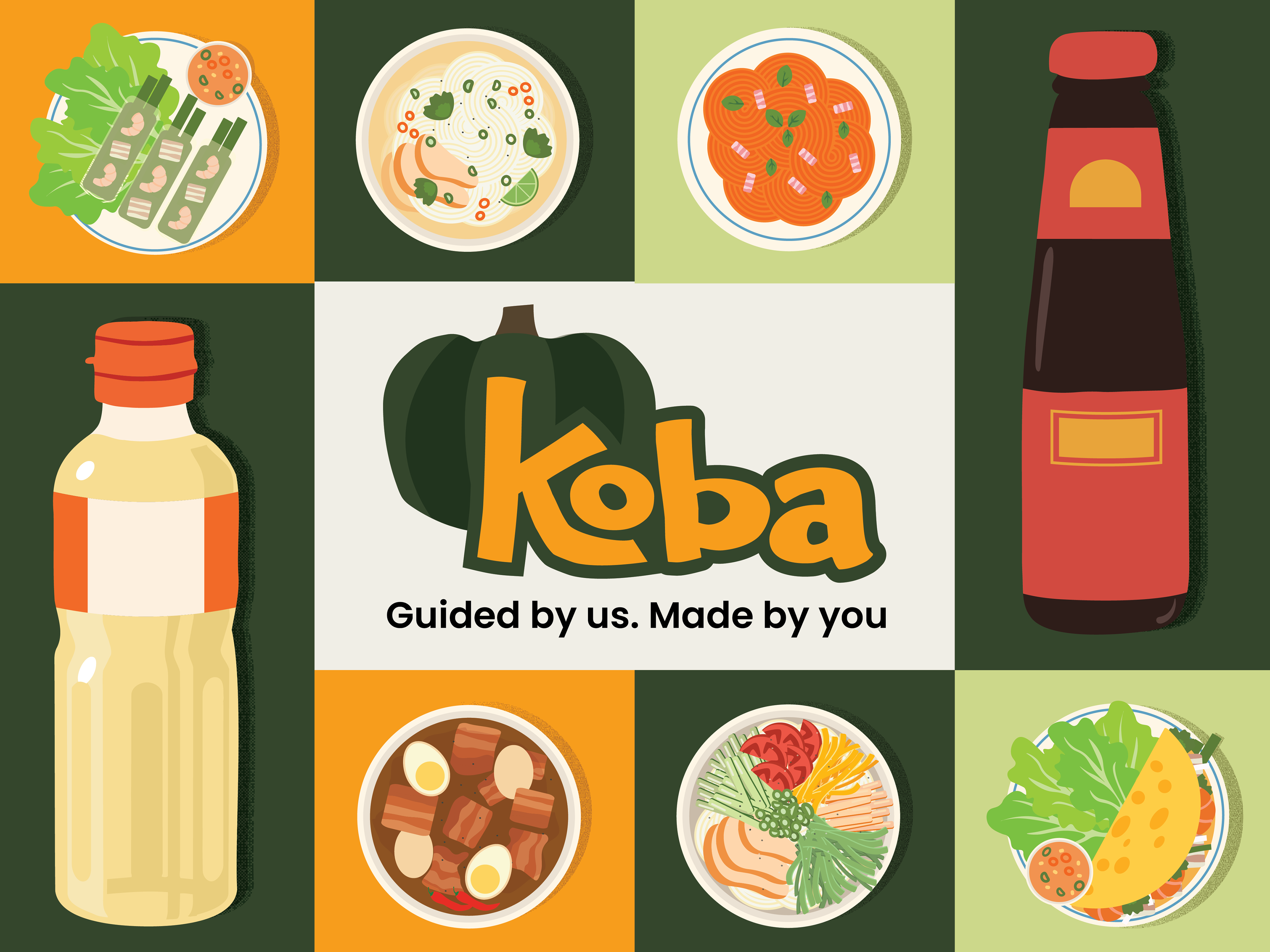
Koba: a Cooking App For beginners
"Most people want to cook. They just don't know where to start."
What started as a pitch in my app development class grew into a six-month-long capstone project: a full app design, visual identity, packaging system, cookbook, recipe cards, and a theoretical partnership with the Oregon Food Bank.
Presented at OSU Horizons in June 2026 as part of the OSU Graphic Design Senior Showcase.
Project Overview
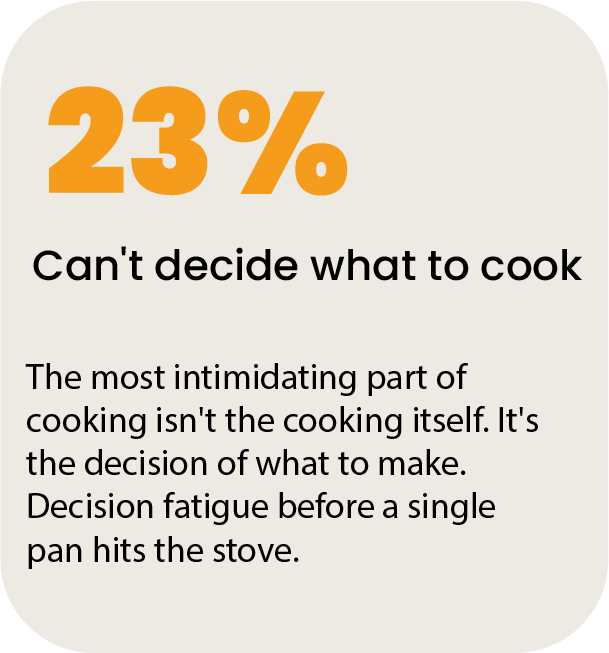
I love to cook, and Koba came directly from that love. I watched my friends struggle to feed themselves when they moved out on their own. The problem wasn't motivation. Most people can follow a recipe just fine. But hand them a fridge of random ingredients and ask what's for dinner, and the wheels come off.
Koba is a cooking app designed for young adults who want to cook more but feel overwhelmed by where to start. Through beginner-friendly lessons, pantry tracking, and ingredient-based recipes organized by skill level, it helps users cook with what they already have and actually understand what they're doing and why.
The long-term goal is for users to eventually outgrow the lessons of the app. Once the skills are built, they live in your head, not on your screen.

The Challenge:
The apps that exist assume you already know how to cook.
Existing cooking apps are built around recipes. They tell you what to make. They don't teach you how to think. A beginner who doesn't have one ingredient is stuck. A beginner who doesn't know what to do with what's in their fridge is also stuck. The gap isn't recipes — it's foundational knowledge, confidence, and flexible thinking.
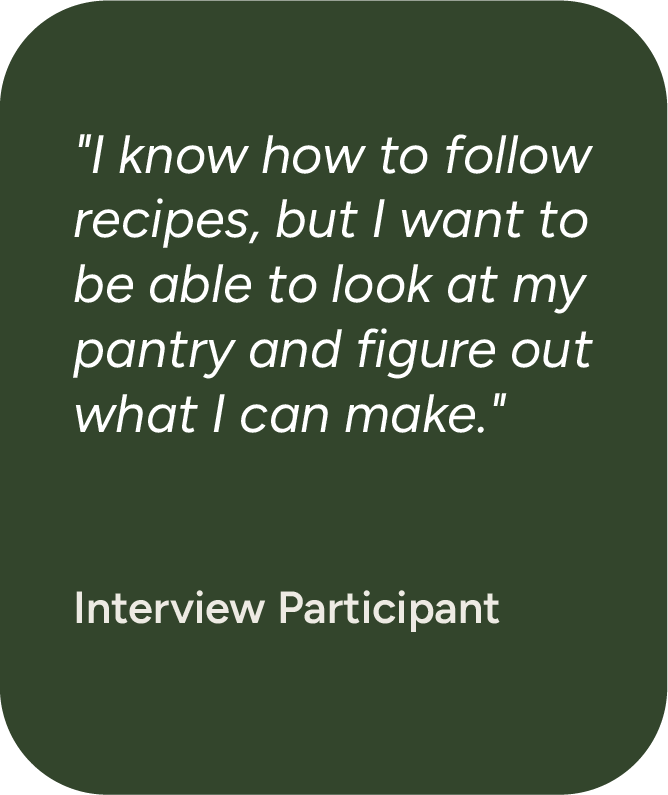
Interview Participant
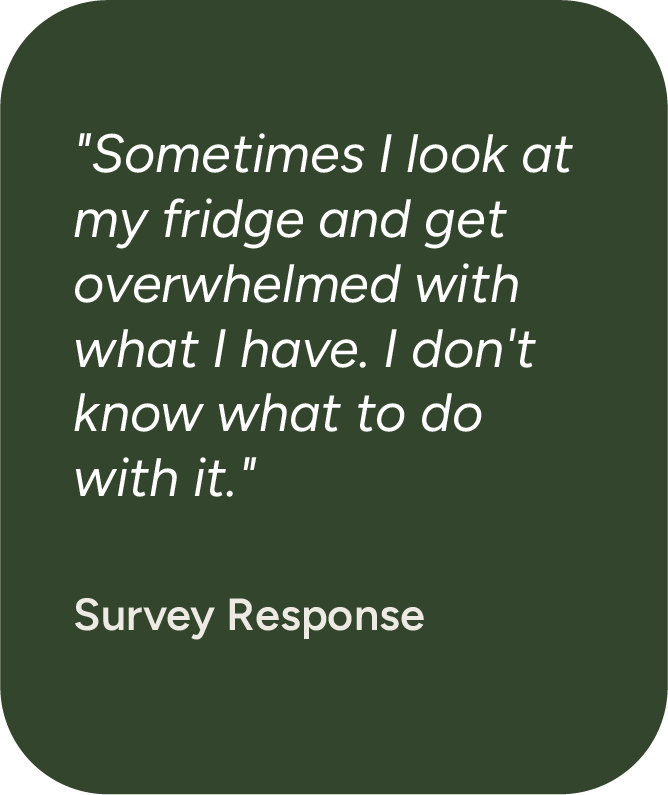
Survey Response
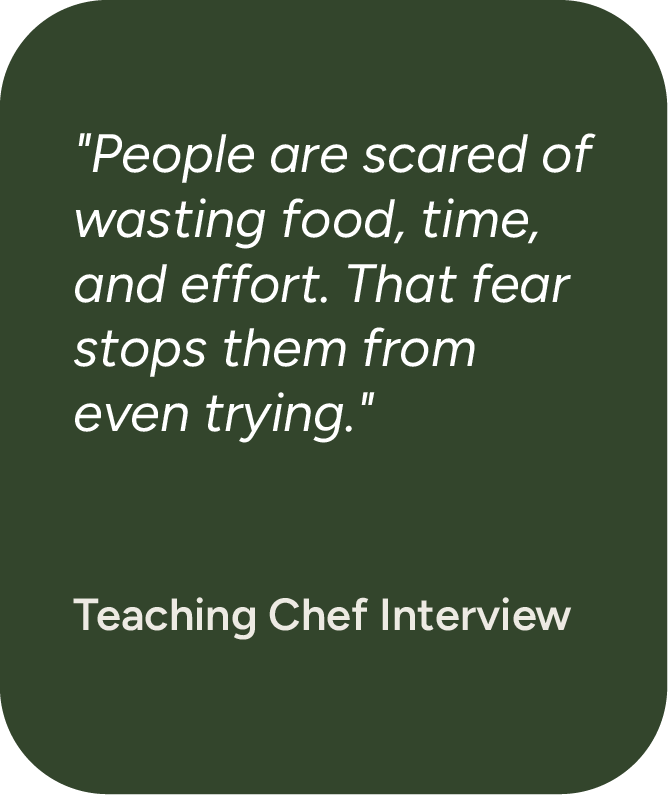
Teaching Chef Interview
Research:
What I found out talking to real people.
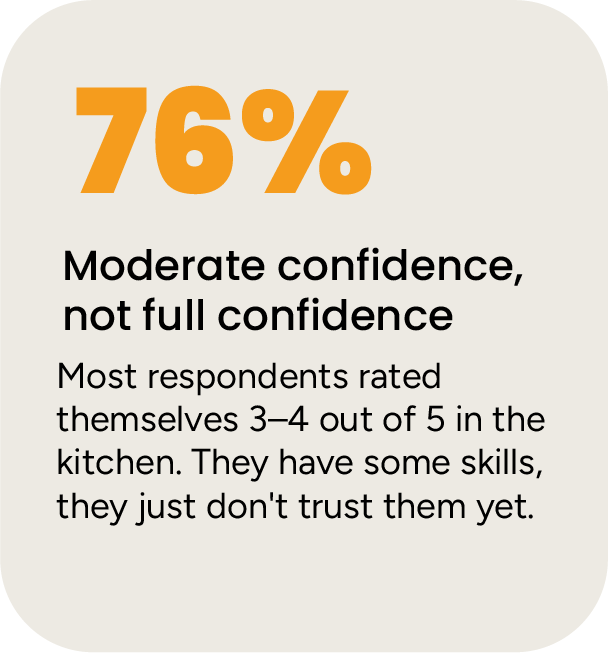
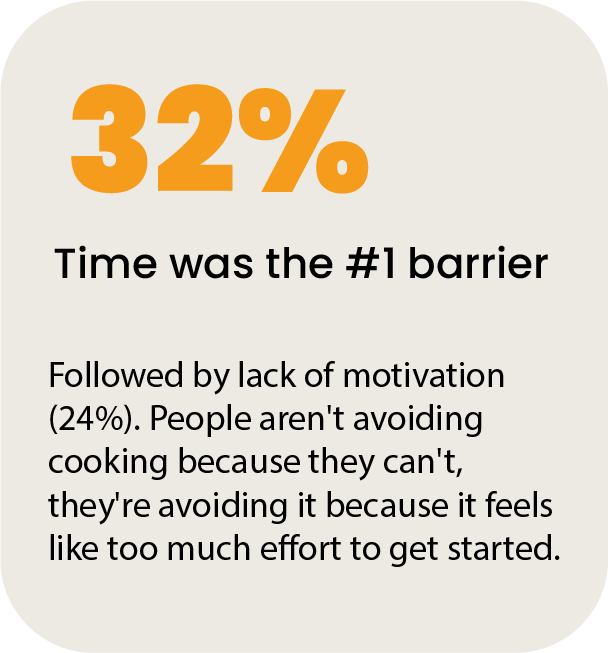
I conducted interviews with beginner cooks, experienced home cooks, and a teaching chef, ran a survey of 71 participants (84% ages 18–24), observed a friend cook a meal in real time, and did a competitive audit of four cooking apps. I also documented my own shopping and cooking habits to surface assumptions I might carry into the design.
Iterations:

User Pathway
Low Fidelity
Mid Fidelity
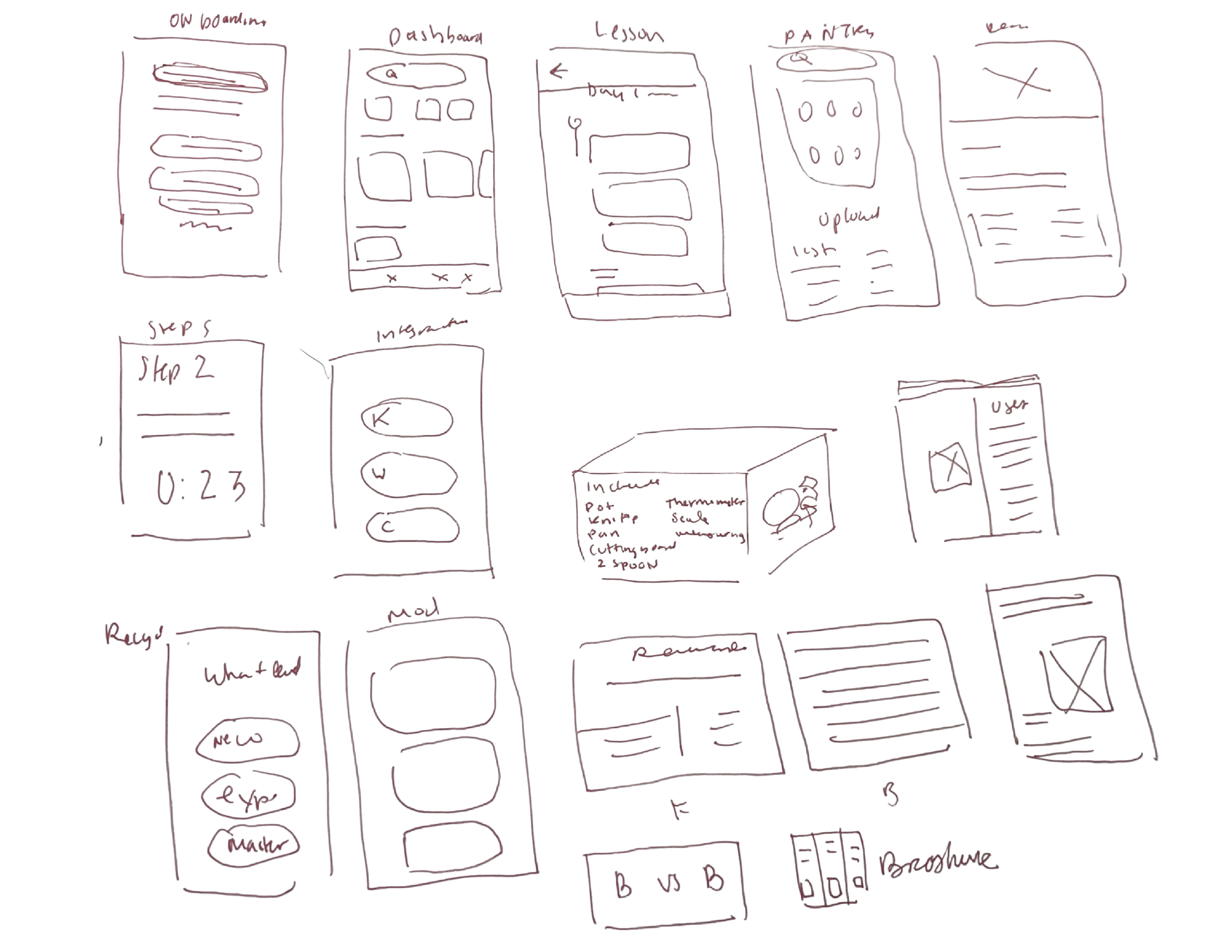
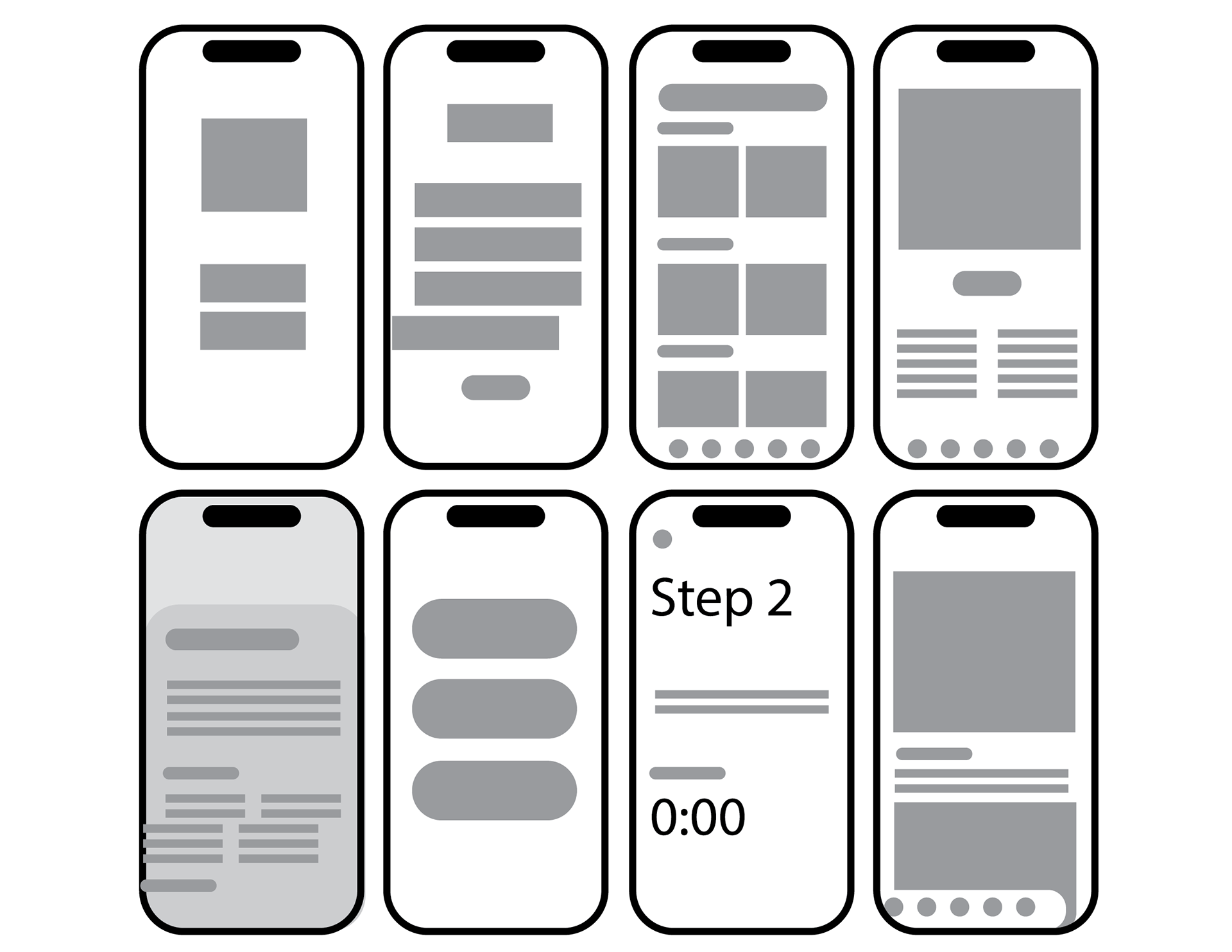
Koba went through a lot of sketching before it became a lot of screens. Most of the iteration happened at the concept level. I had to figure out which features were useful versus just interesting to design.
The biggest shifts came from research: what users said they needed versus what they actually did when handed an app to try.
Early Iteration:
Photography throughout, food that looked aspirational and polished. These would have been made and photographed by me!
AI-powered ingredient matching as a core feature.
Onboarding that assumed the user knew what they wanted.
These ideas evolved into more sustainable solutions →
Final Iteration:
Illustrations! Approachable, consistent, and free from the "this is too hard for me" moment that a perfect food photo can trigger.
Machine learning-based pantry logic is smarter and more realistic for actual development.
Experience-level onboarding that adapts the entire app path to where the user is.
Final Outcome: An app that's almost ready to build.
A centralized cooking app that brings lessons, pantry tracking, and ingredient-based recipes together in one place. There is no longer jumping between platforms and no assuming prior knowledge.
Pantry Tracker: Log what you have and get recipes that actually work with it.
Skill-Level Lessons: 2 recipes that teach you how to think about cooking, not just follow steps.
Experience Onboarding: The app adapts to where you are, whether you are a complete beginner or getting more confident.
Tagged Recipes: Easy, quick, cheap, uses X. Filter by what matters to the user right then and there.
Key Screens:
From the experience-level onboarding through pantry setup and into the lesson and recipe flows — designed to feel warm and low-stakes at every step.
Onboarding
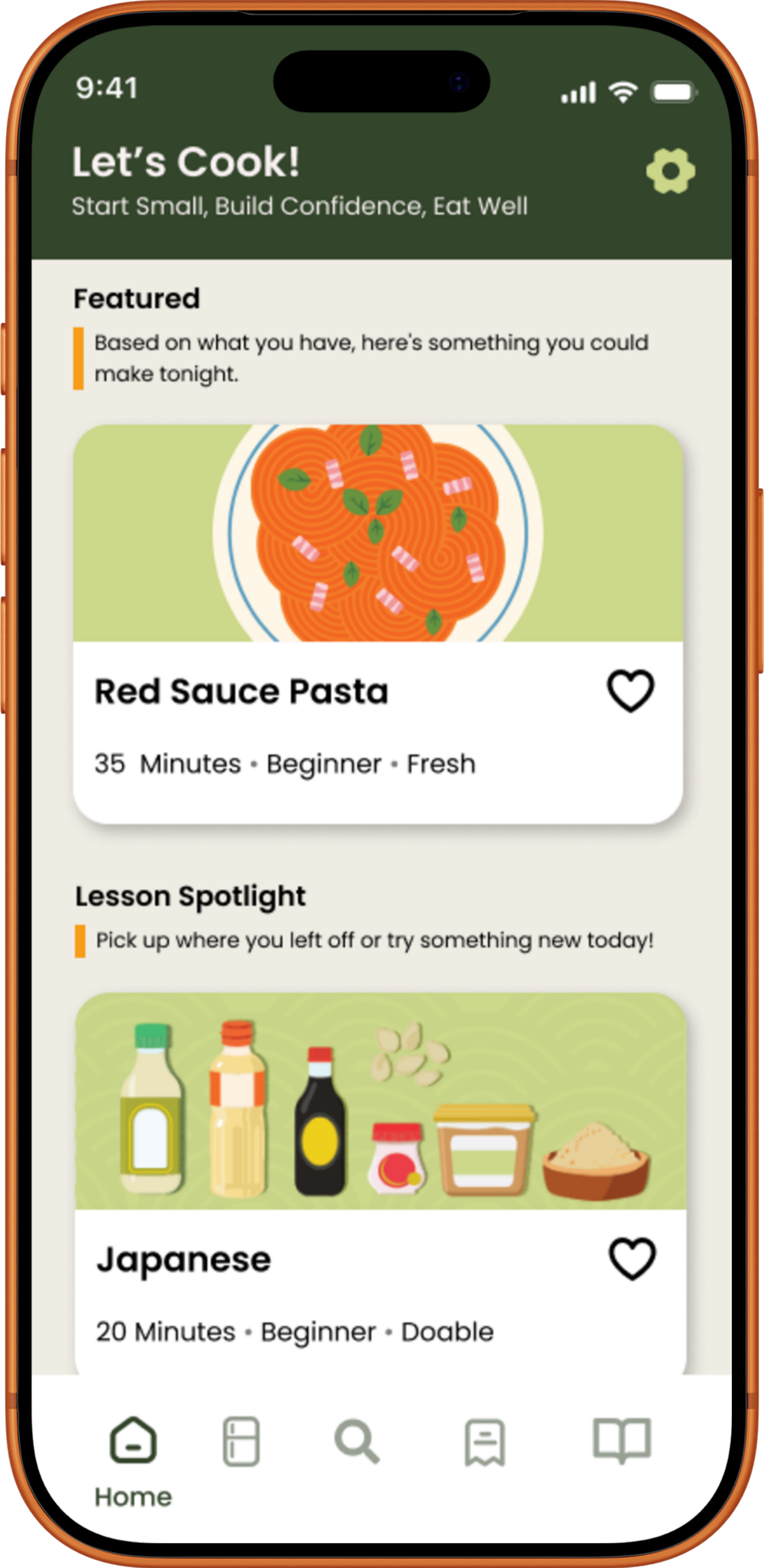
Ho9me
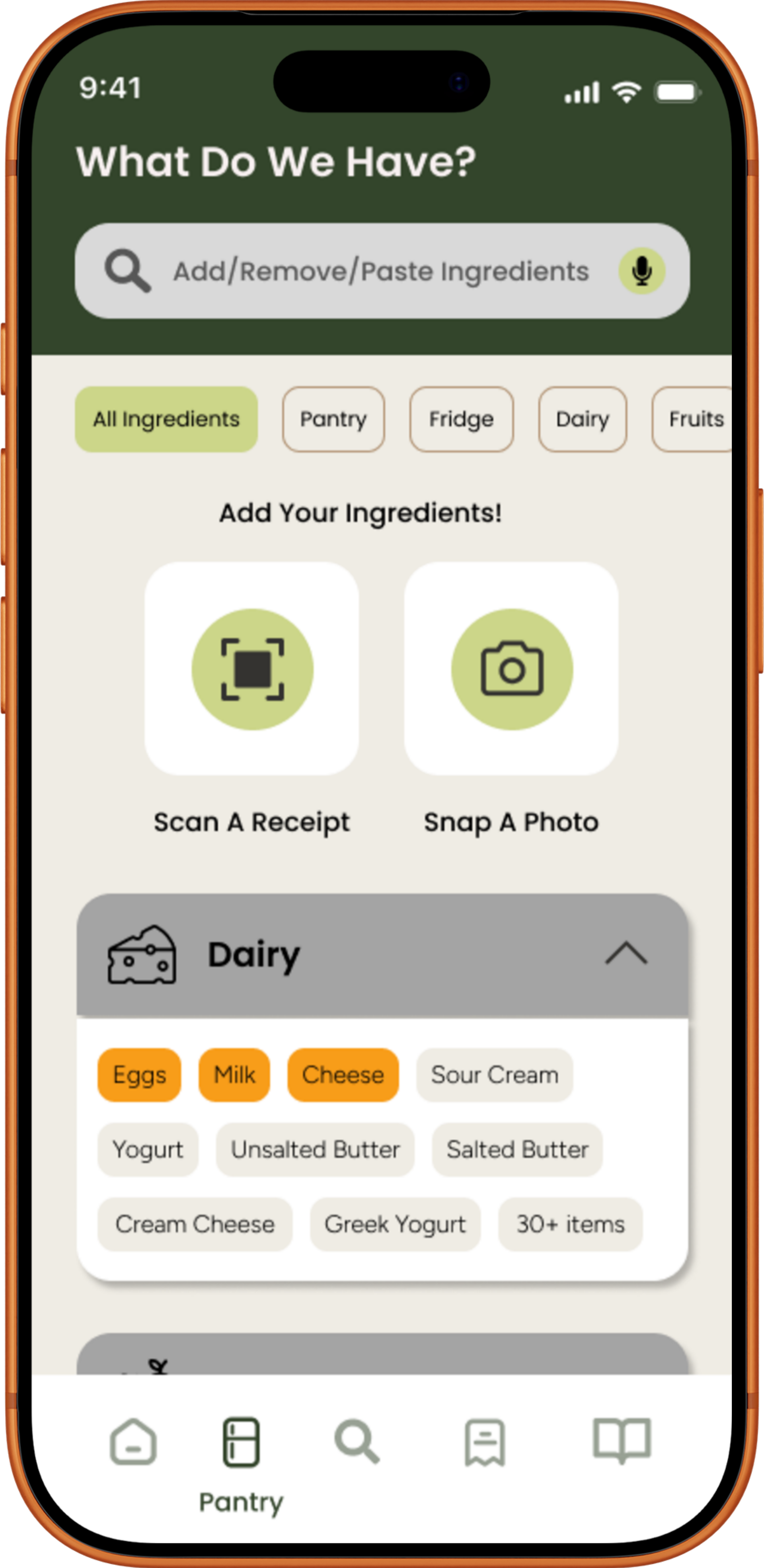
Pantry
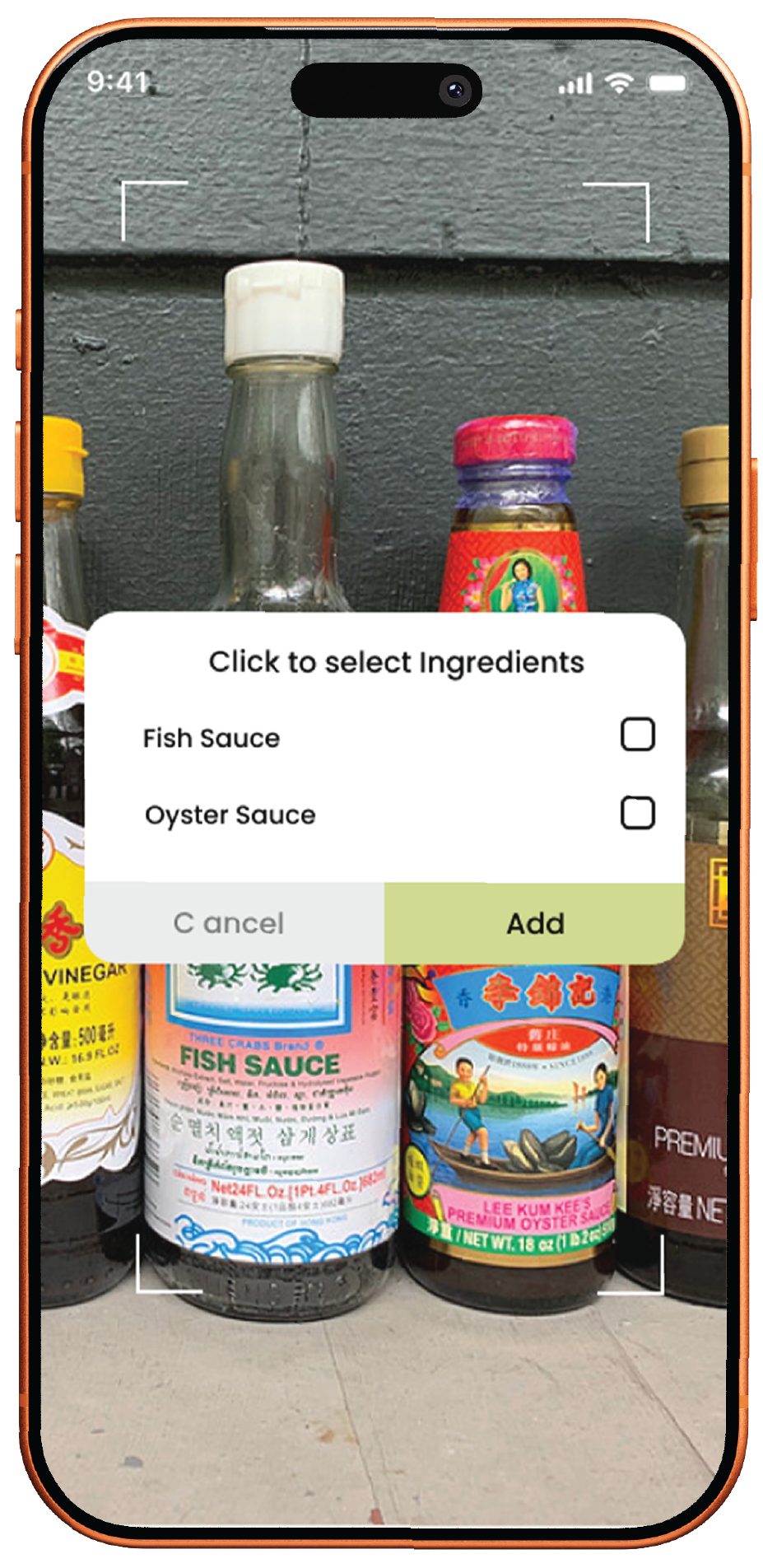
Image Scan
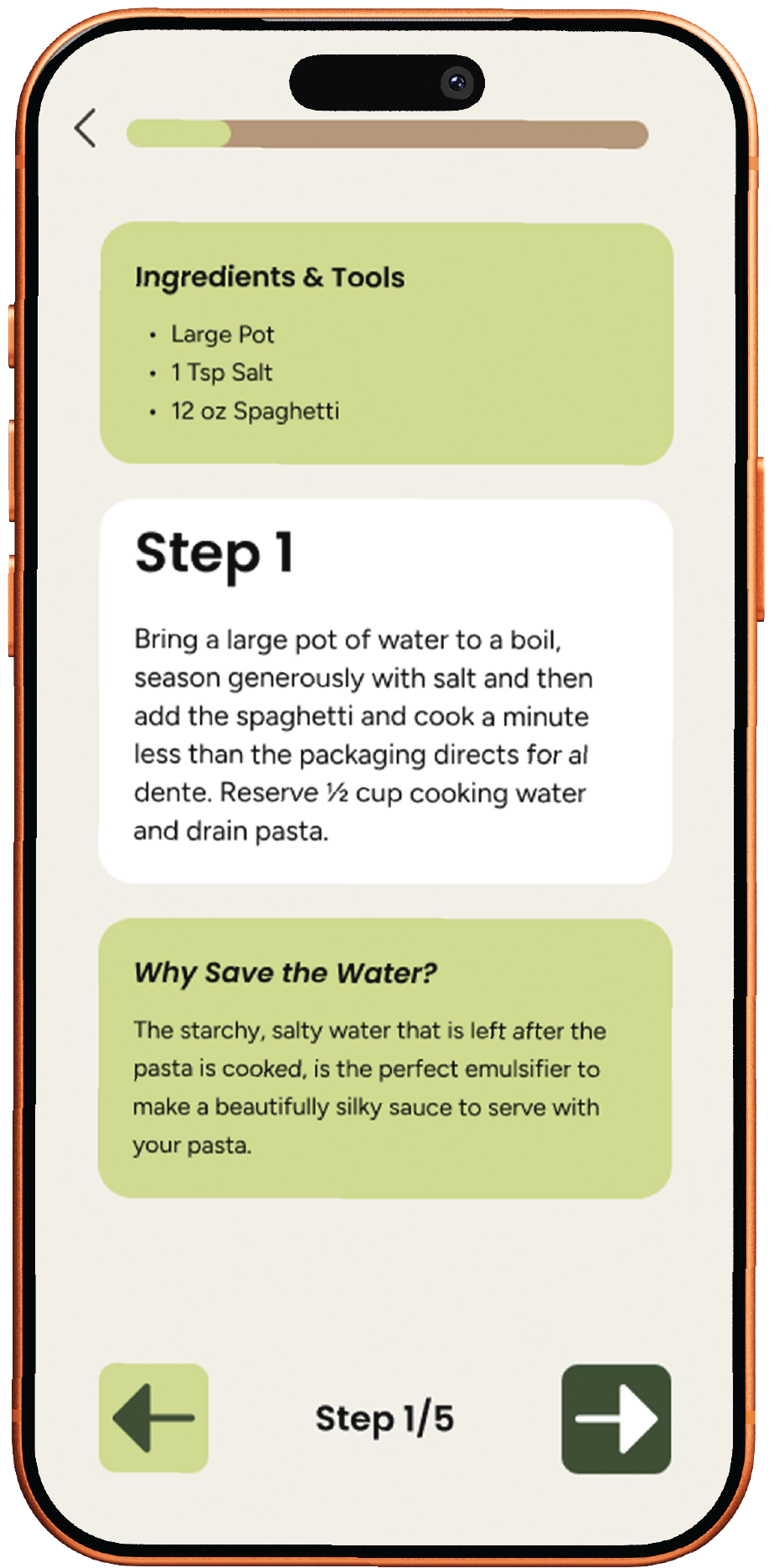
Cooking Mode
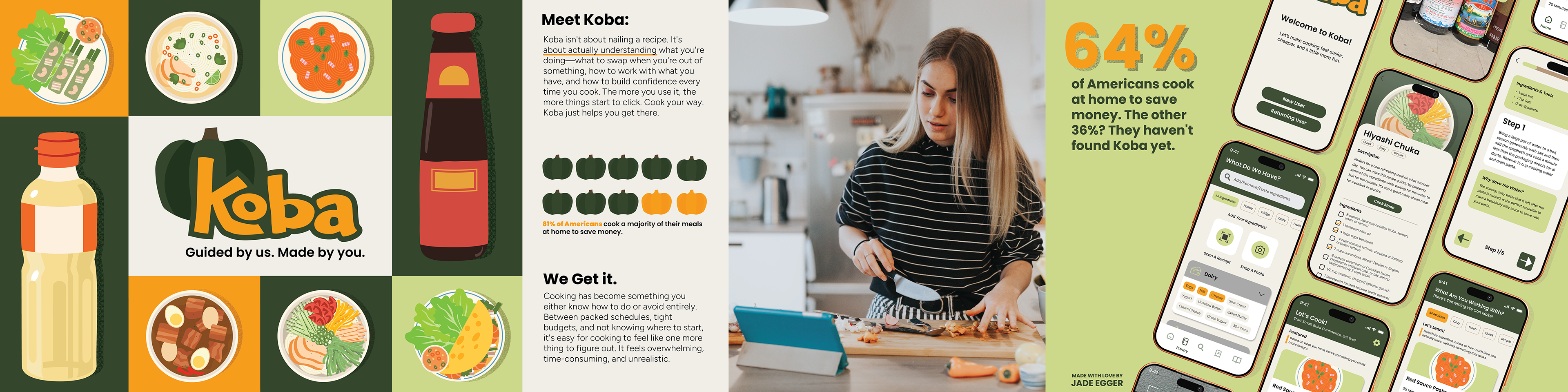
Triptych
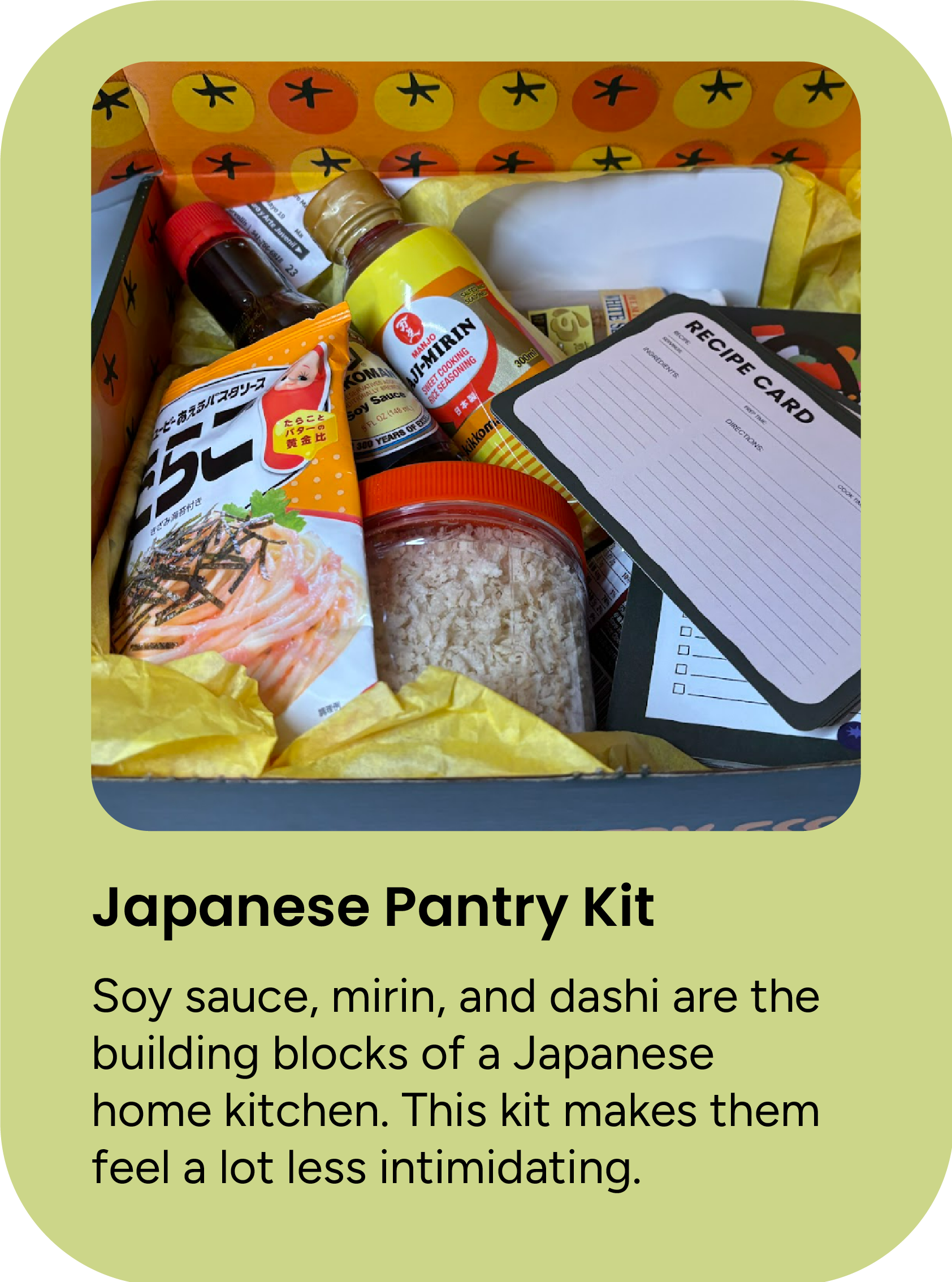
Pantry starter kits inspired by three food cultures:
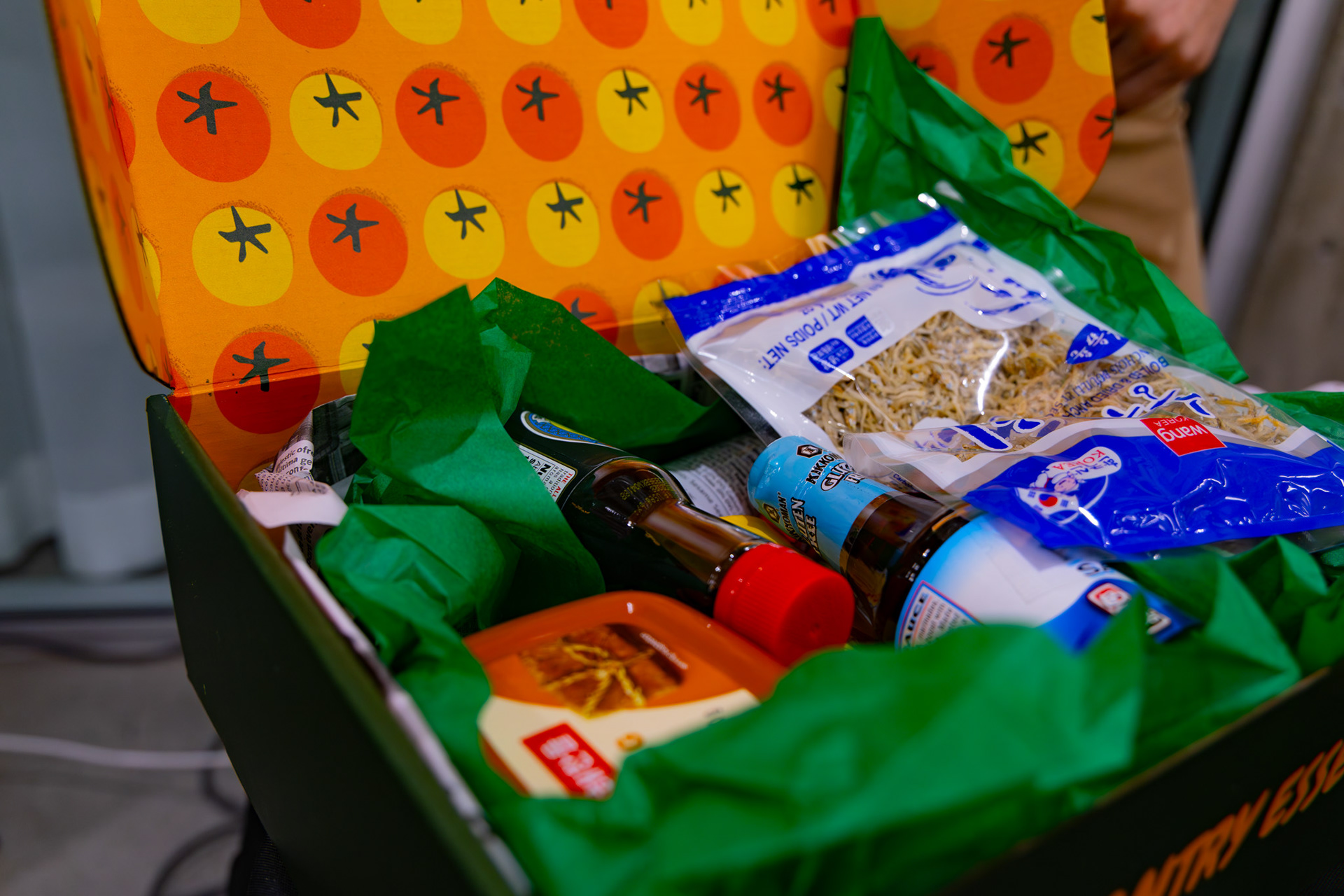
One of the things that changed the way I cook was working alongside people from completely different food backgrounds. That exposure to Japanese, Korean, and Vietnamese kitchens, the ingredients, the techniques, the flavor logic, shifted how I think about food. The Koba pantry starter kits are a way to pass that on. Each kit introduces staple pantry ingredients from one cuisine, with everything you need to start cooking from it confidently.
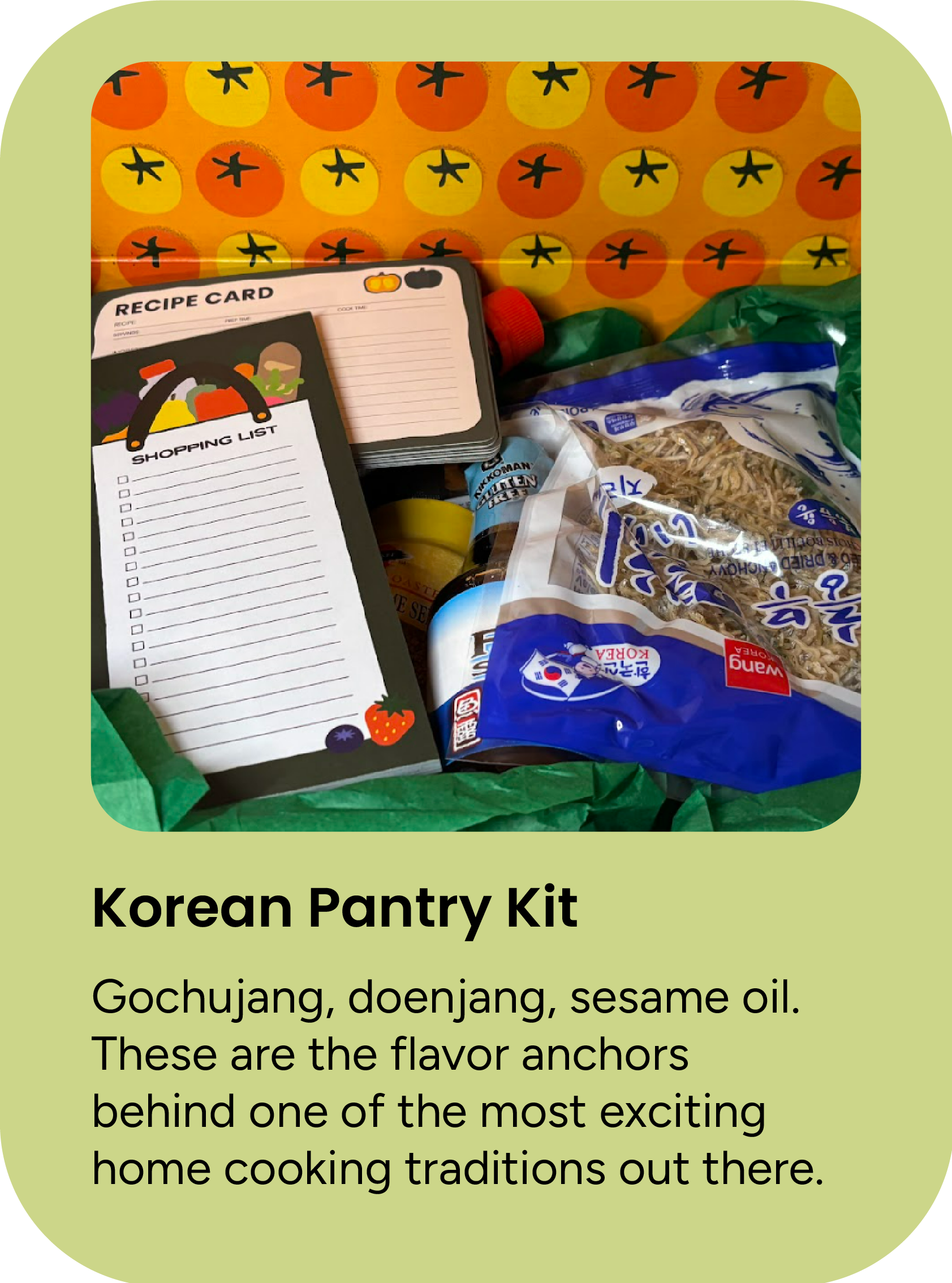
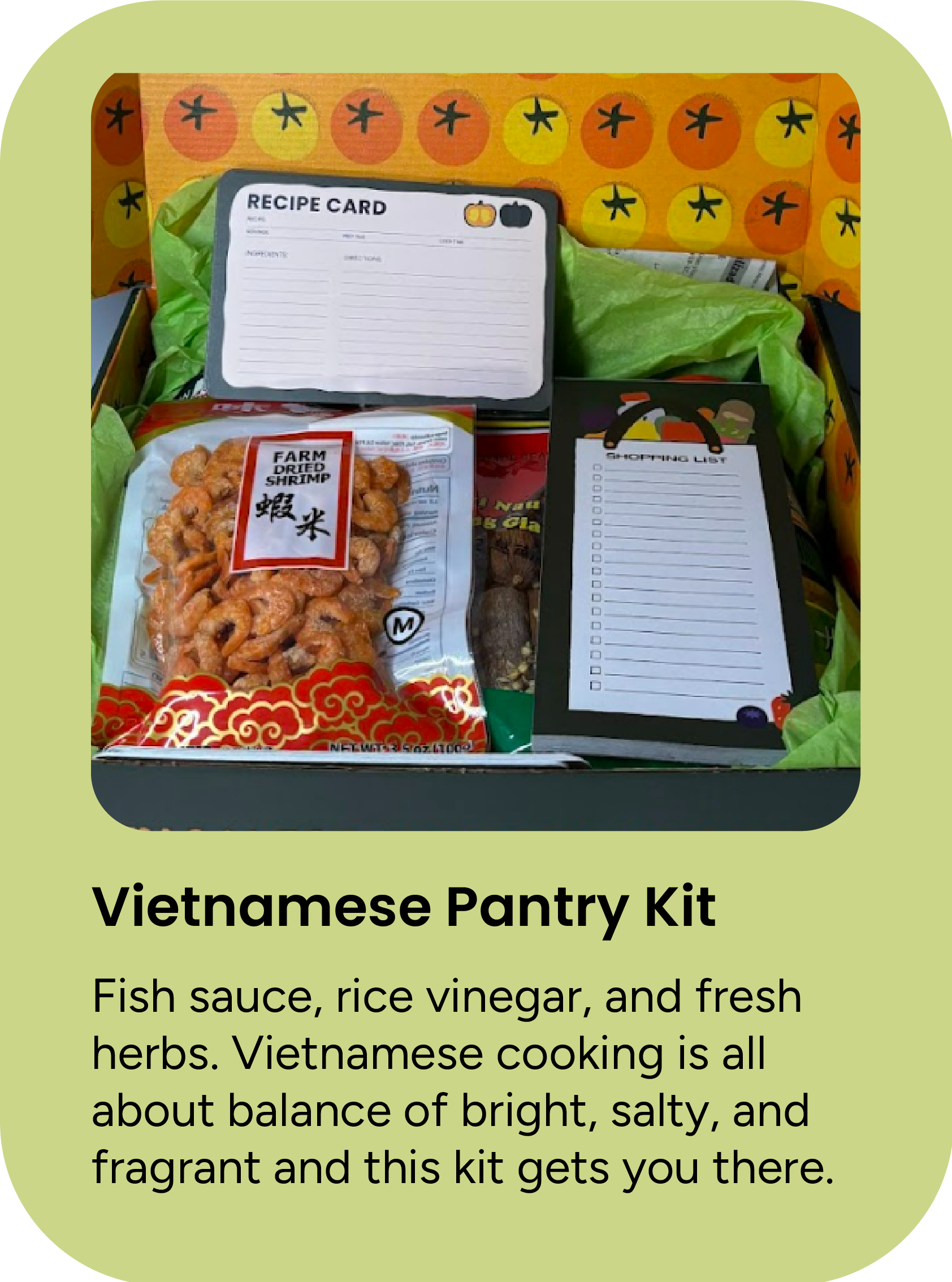
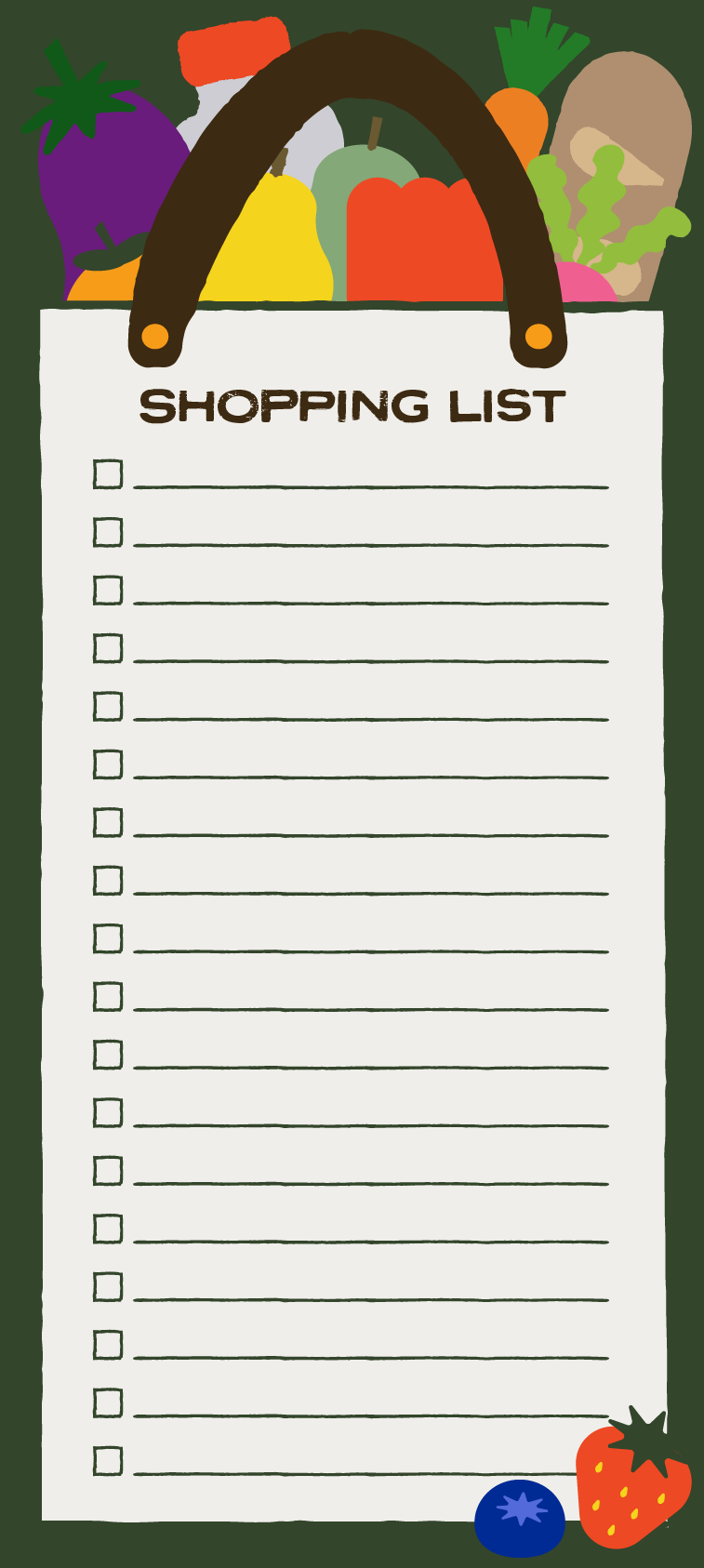
Shopping List Notepad
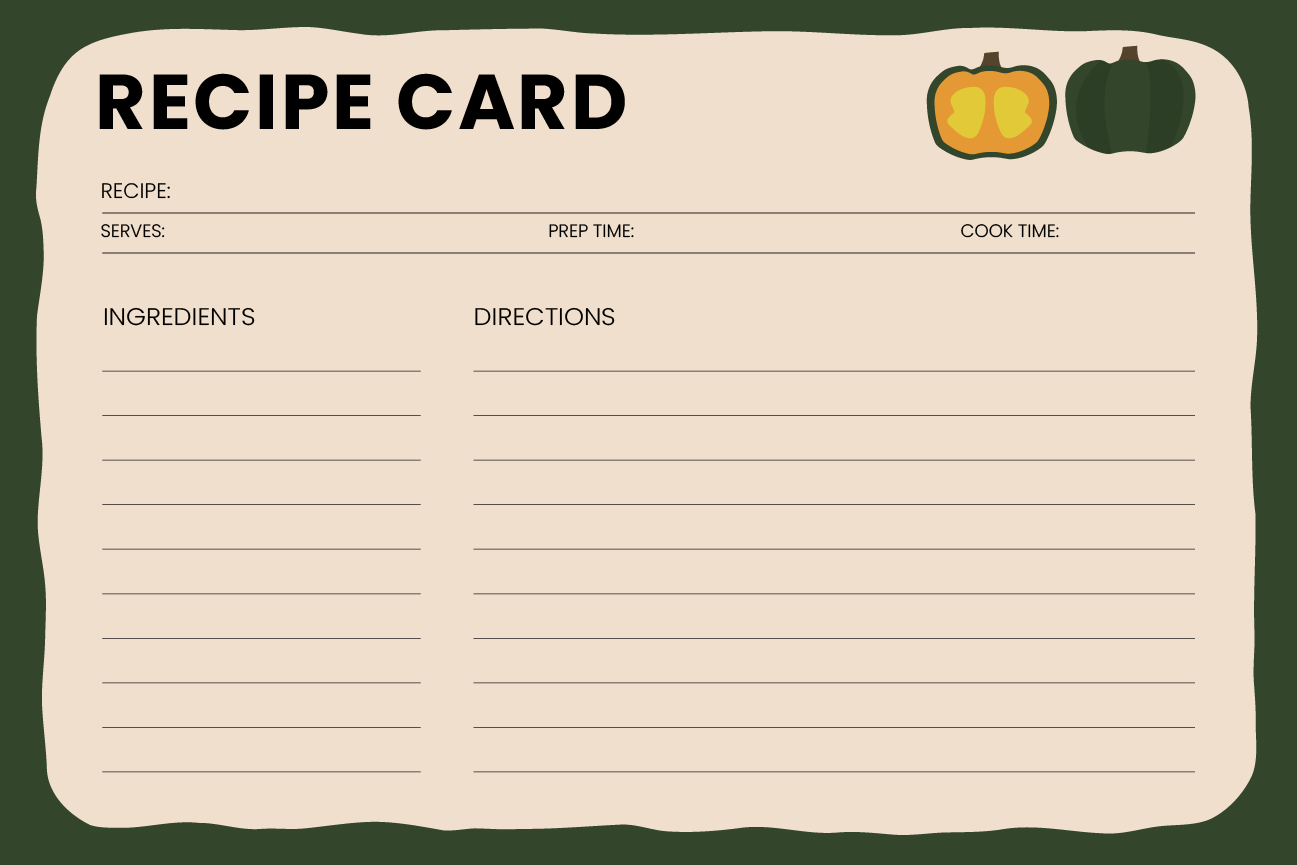
Recipe Card
Koba × Oregon Food Bank:
Good food access and cooking confidence are connected. You can't build healthy habits if you don't have ingredients to work with. This theoretical partnership with the Oregon Food Bank extends Koba's mission into community food access, bringing the same approachable, skills-first approach to people navigating food insecurity.
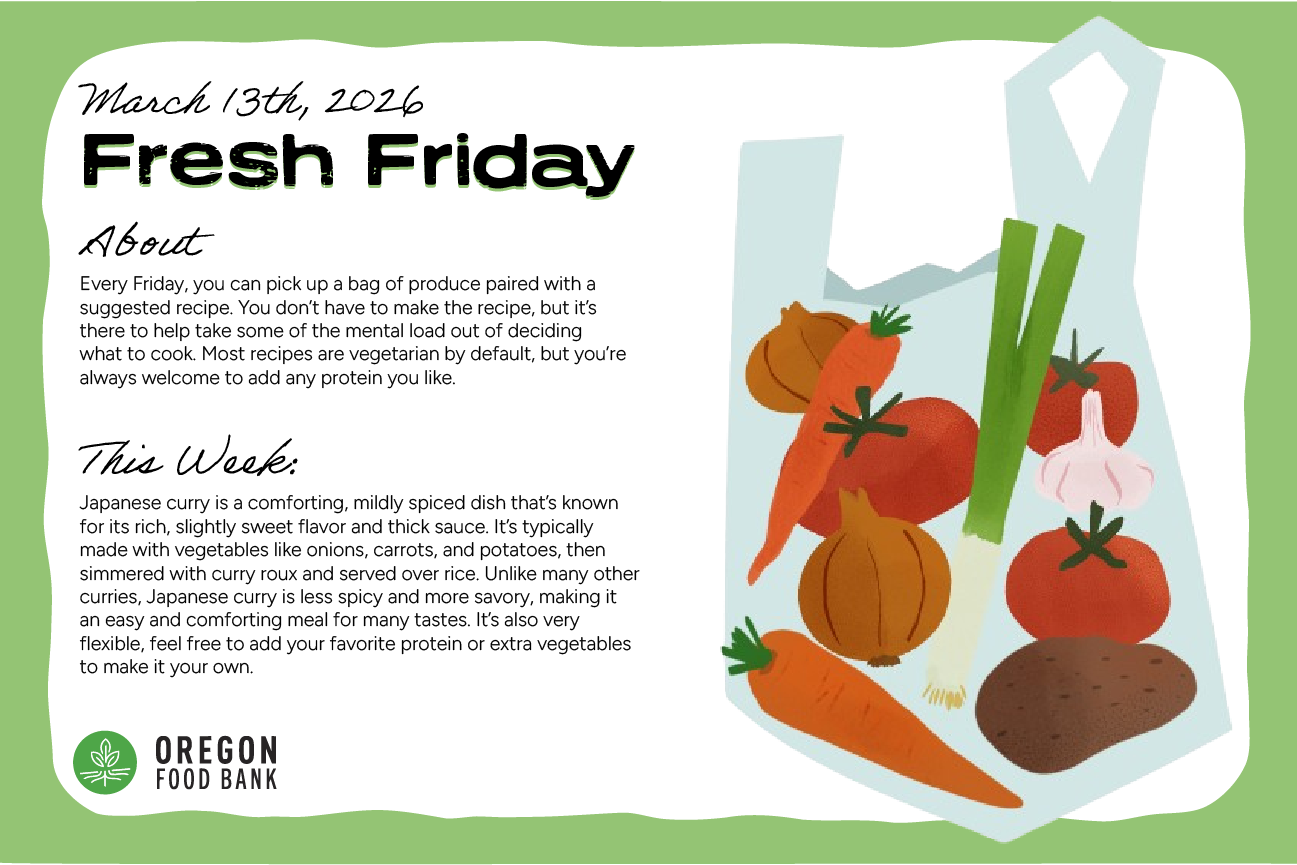
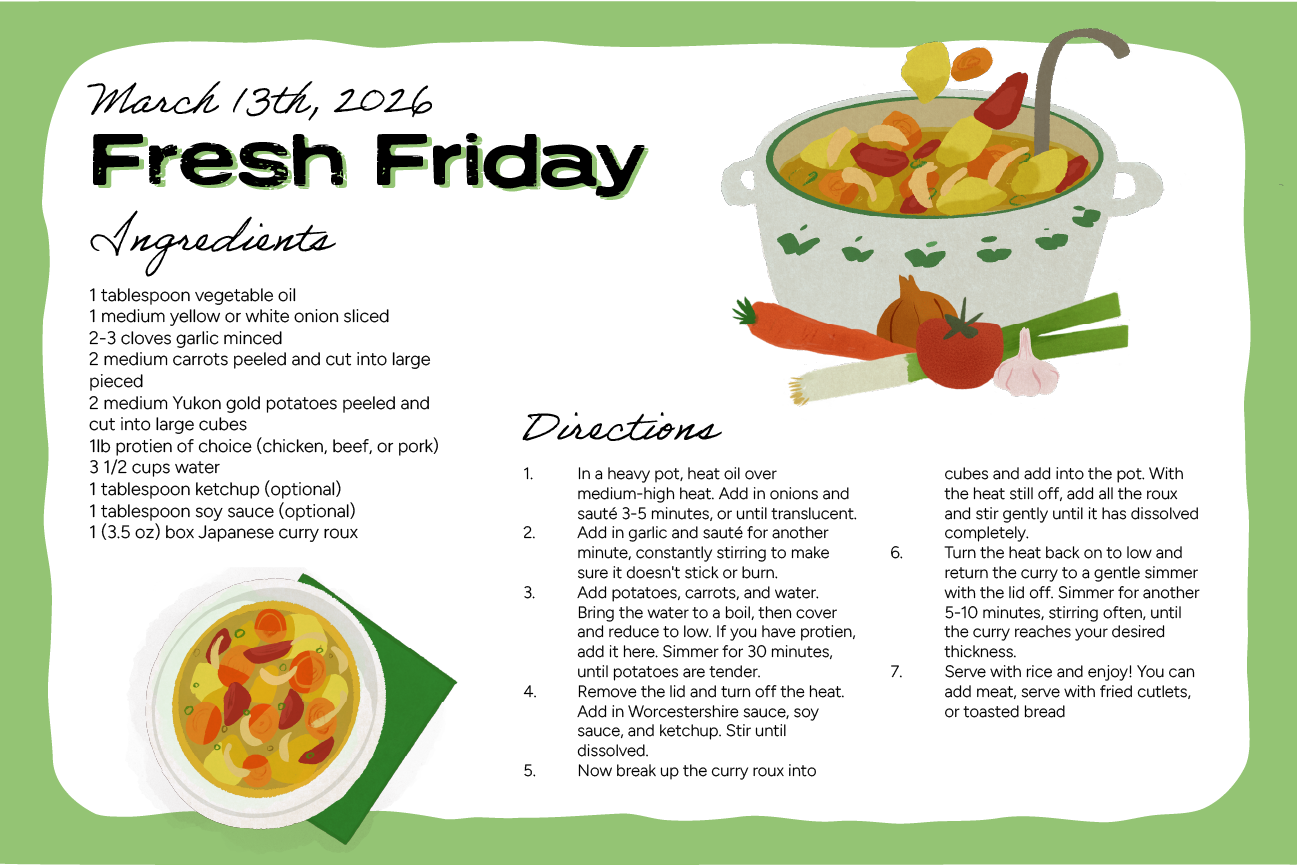
The partnership is called Fresh Friday. Every Friday, food bank visitors receive a bag of fresh produce alongside a recipe postcard tucked inside, a simple, beginner-friendly recipe built around exactly what's in the bag. No extra shopping, no prior knowledge needed. Just pick up your produce, head home, and cook.
The goal is the same as Koba's: make cooking feel doable with what you already have.
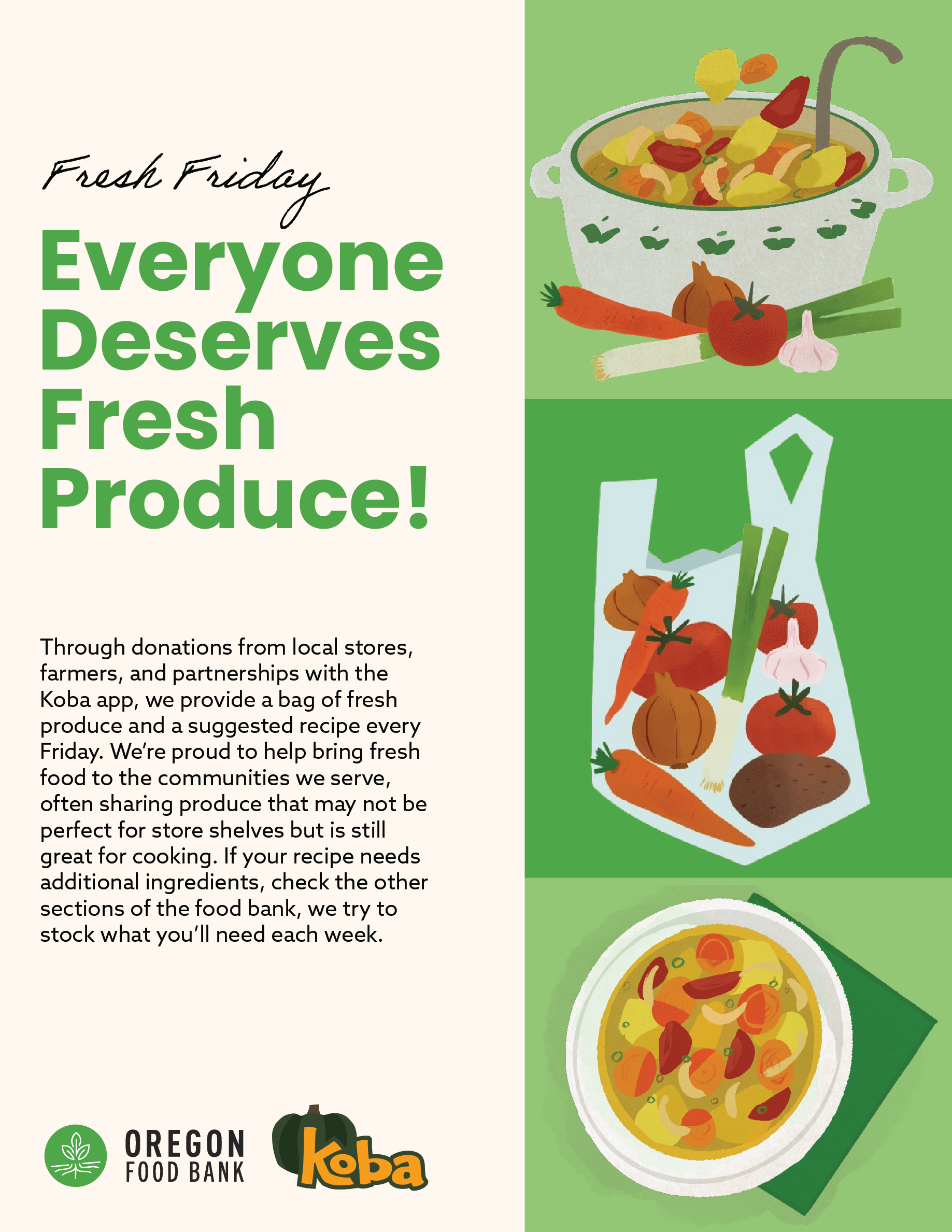
Flyer For Fresh Friday
Cook Book:
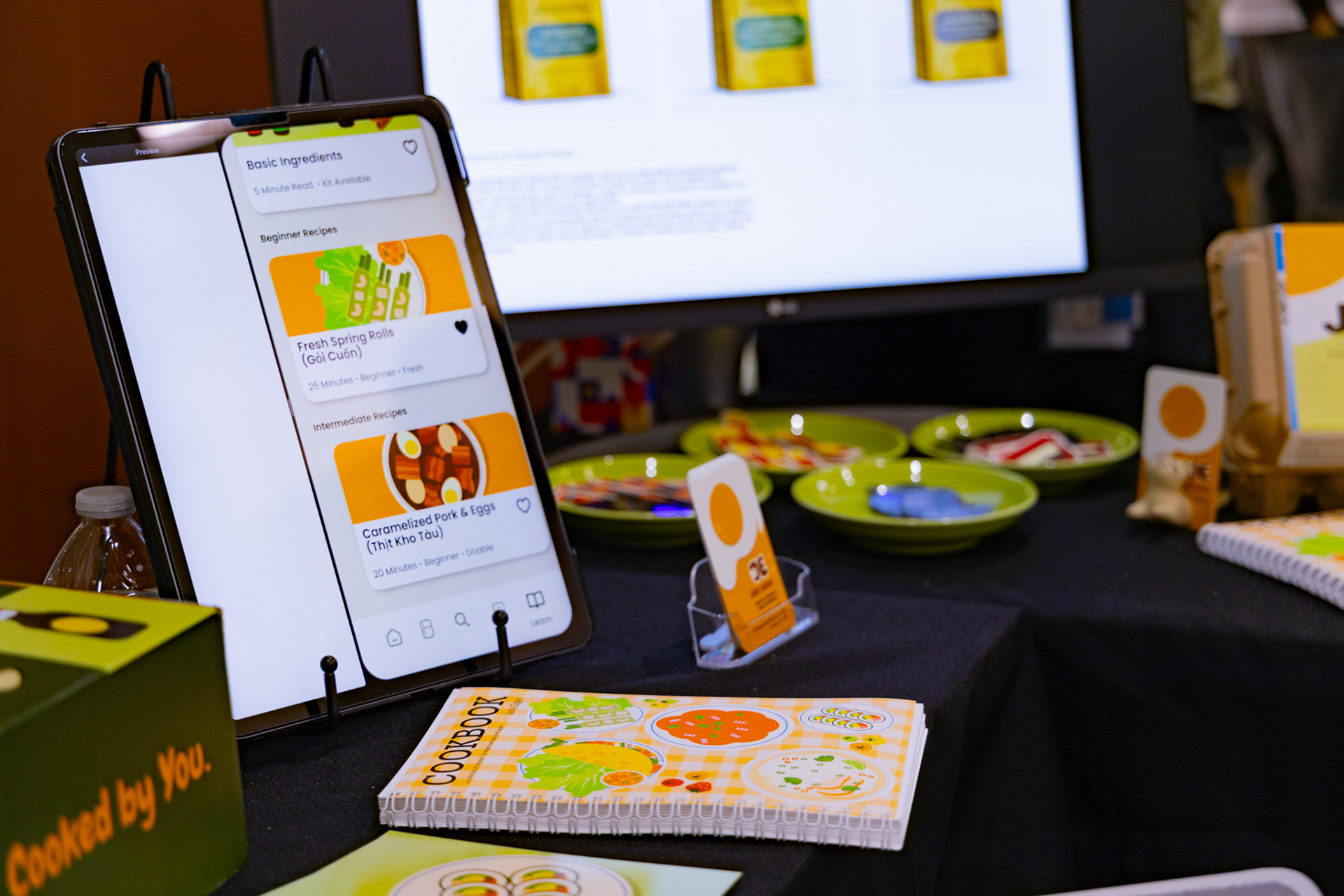
Alongside the Koba brand system, I put together a personal cookbook as a gift for my friends. It's a collection of recipes I've saved, tested, and cooked for the people I love, pulled from creators I admire, dishes my mom made that I finally wrote down, and things I've cooked so many times I know them by heart.
Every recipe in it is personally tested and certified yum. The recipes skew heavily toward Asian cuisines and are written in a casual, first-person voice that doesn't assume you know what you're doing. The pantry intro alone could get you through most of the book.
It's not a Koba deliverable, but it's the same spirit and it shares the same illustration style. White space is intentional. Write in it, make notes, make it yours.
Photo & Prototypes:
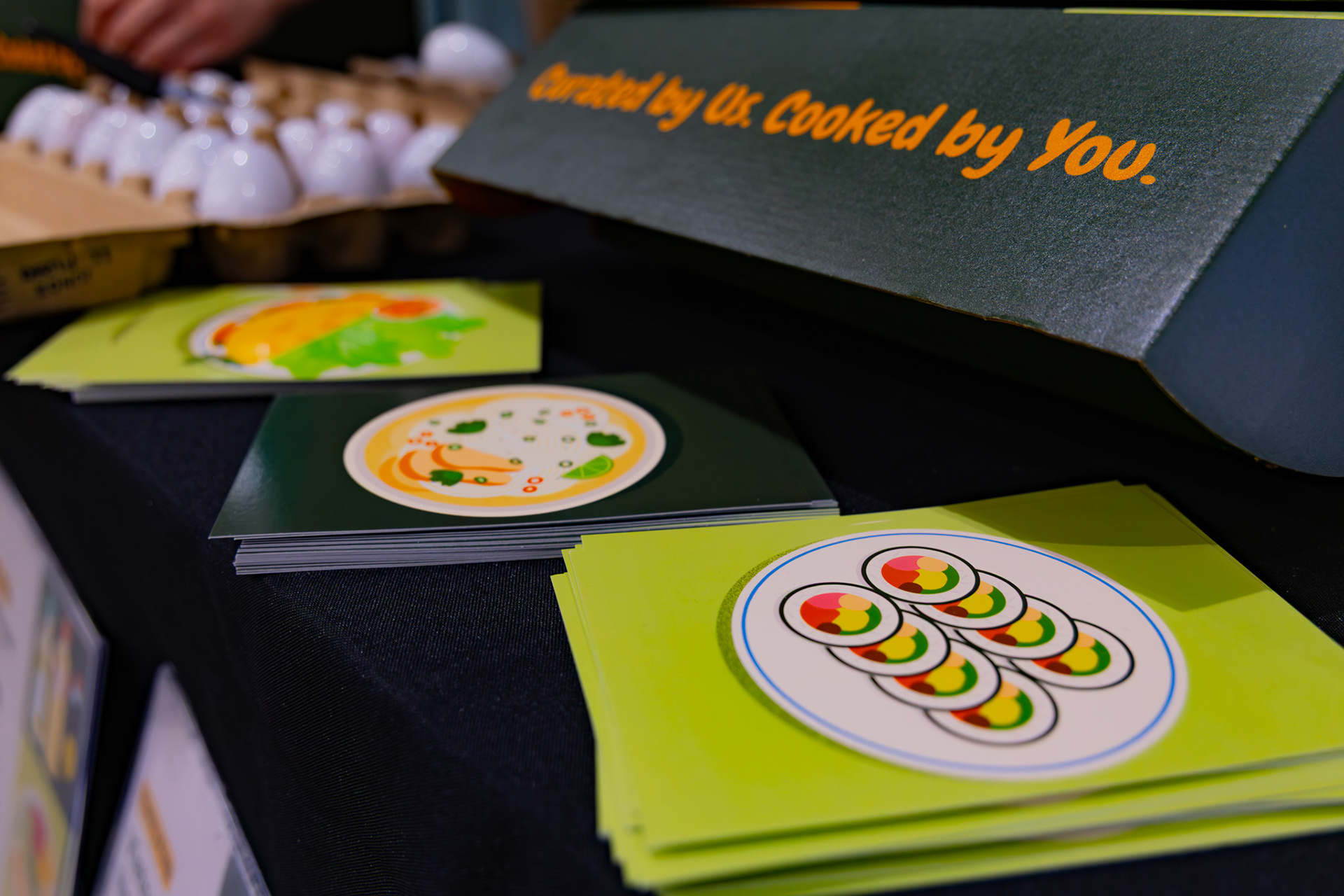
Post Cards & Package Designs
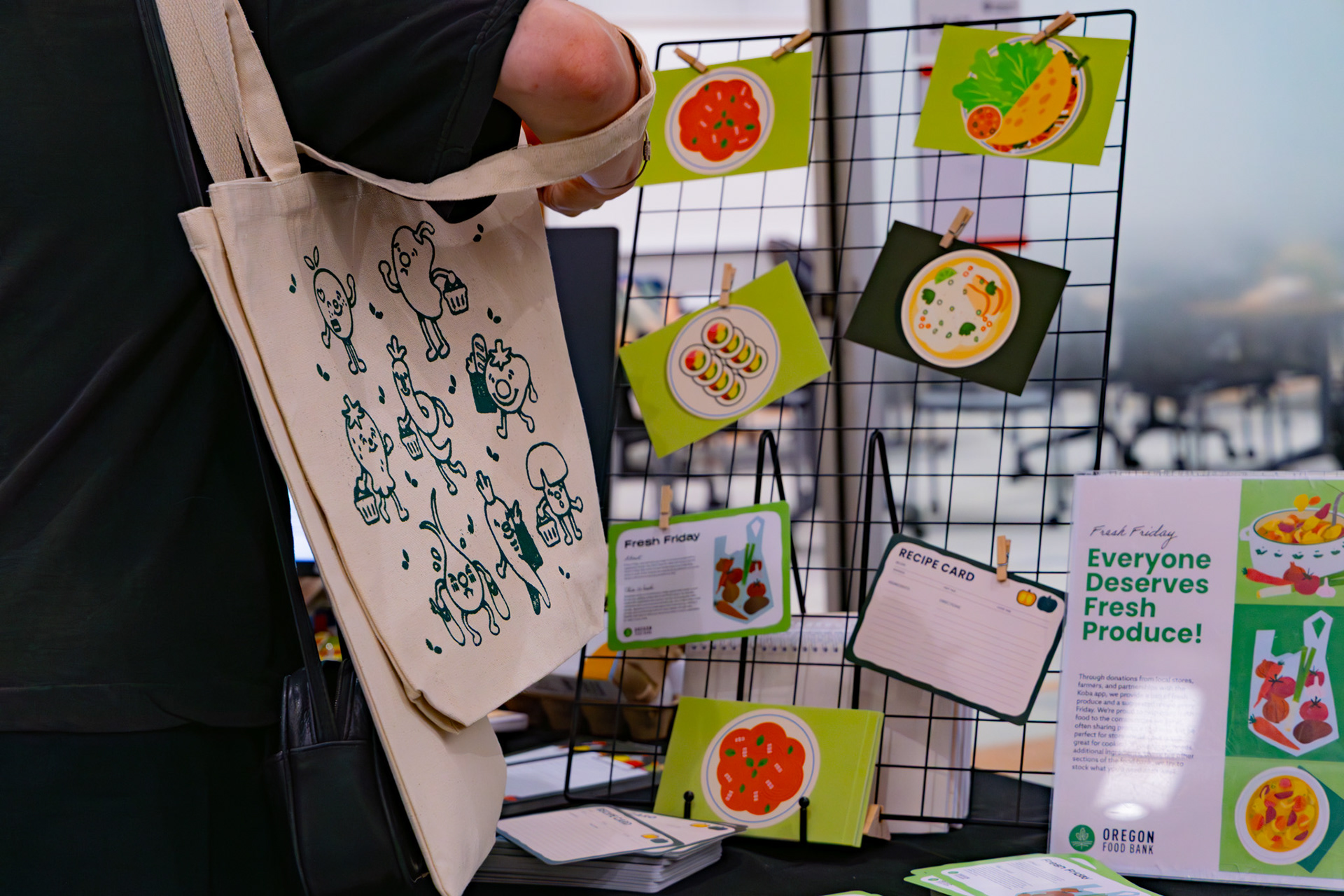
Poster and Postcard Designs
App & Cook Book
Package Design
The Outcome:
Koba started as a pitch in an app development class and ended up on a table at OSU Horizons, six months of work representing every part of my design practice.
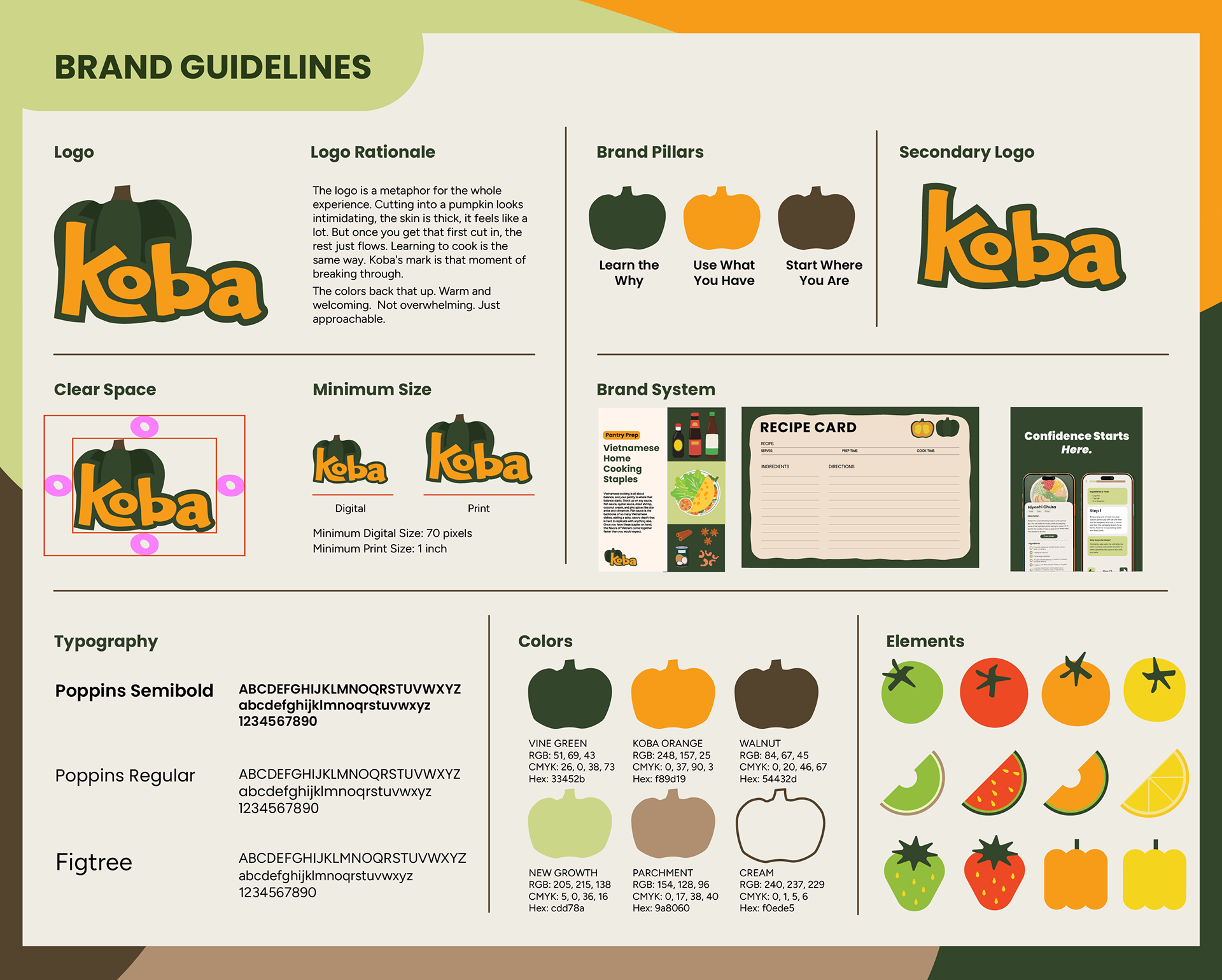
The thing that stuck with me most wasn't any single deliverable. It was the illustration decision. Real food photos can make a dish look too perfect before you've even read the recipe, that compare-and-despair moment right at the start. Illustrations sidestep that entirely and keep things feeling achievable, which is the whole point of Koba.
Working in different kitchens alongside people from different food cultures genuinely changed how I think about ingredients and flavor. Koba is my attempt to make that same sense of discovery available to anyone who wants it, not just people who happened to grow up around it.